Garages have transformed beyond their traditional roles as simple storage or parking areas. Today, they serve as home gyms, workshops, hobby spaces, and more. With so many possibilities, the flooring you choose can dramatically impact your garage’s functionality, safety, and aesthetics. This makes rubber garage flooring an excellent choice for anyone seeking durability, comfort, and style.
At Superior Garage Flooring, we specialize in premium rubber flooring solutions designed to withstand the unique demands of garage environments. In this article, we’ll discuss why rubber garage flooring is an ideal upgrade, review different types available, share expert installation and maintenance tips, and highlight how it supports various garage uses.
Why Rubber Garage Flooring Stands Out
When choosing garage flooring, durability and practicality are top priorities. Rubber flooring offers a combination of qualities that few materials can match, making it a smart investment for both homeowners and commercial spaces.
Durability That Lasts
Rubber is inherently tough and resistant to damage from everyday wear and tear. Unlike traditional concrete or vinyl, rubber floors don’t easily crack or chip, even under the stress of heavy vehicles, equipment, or dropped tools. This resilience translates into long-term cost savings by reducing the need for repairs or replacements.
Enhanced Safety Through Slip Resistance
Garages are often exposed to moisture, oils, and other slick substances that can cause accidents. Rubber’s natural texture provides excellent grip, reducing the risk of slips and falls. This safety benefit is especially important in family homes, workshops, and commercial garages where accidents can be costly.
Comfort and Impact Absorption
The shock-absorbing qualities of rubber flooring protect not only the floor beneath but also your joints and muscles. This makes it particularly well-suited for garages converted into gyms or workspaces where you spend hours standing or moving heavy objects.
Noise Reduction for a Quieter Space
Rubber floors absorb sound more effectively than concrete or tile, making your garage quieter. This can be a significant advantage if you use power tools, run exercise equipment, or want to minimize noise disruption in adjoining rooms.
Chemical and Stain Resistance
Garages often encounter spills from gasoline, oil, antifreeze, and other chemicals. Rubber flooring resists damage from these substances better than many other materials, maintaining its appearance and functionality over time.
Easy to Clean and Maintain
With a simple routine of sweeping and occasional mopping, rubber floors stay clean and fresh. They don’t trap dust or allergens, contributing to a healthier environment, and specialized rubber cleaners can restore their look without harsh chemicals.
Exploring Types of Rubber Garage Flooring
Selecting the right rubber flooring depends on your garage’s size, intended use, and budget. Here’s a breakdown of common types and their benefits:
1. Interlocking Rubber Tiles
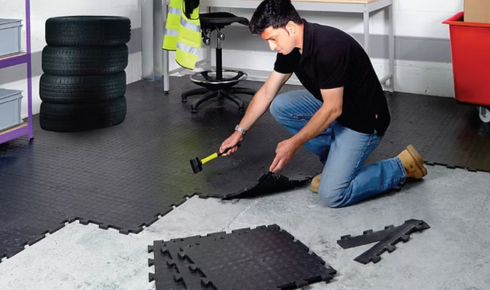
Interlocking tiles are among the most popular options for garage flooring. They are easy to install as a DIY project since each tile locks into the next, creating a stable surface without adhesive. This flexibility also means you can replace a damaged tile without redoing the entire floor.
Benefits:
- Easy installation and repair
- Variety of thicknesses and textures
- Customizable layouts and designs
2. Rubber Rolls
Rubber rolls provide a seamless flooring surface, ideal for larger garages or commercial settings. Though installation often requires professional assistance, rolls offer superior uniformity and fewer seams where dirt and moisture can accumulate.
Benefits:
- Seamless and uniform surface
- Enhanced durability and moisture resistance
- Suitable for heavy-duty commercial garages
3. Poured Rubber Flooring
This is a poured-in-place solution that creates a smooth, monolithic floor. While more common in industrial environments, it is gaining traction in residential garages for its sleek finish and robust performance.
Benefits:
- Permanent and smooth surface
- Minimal seams and joints
- High customization in color and texture
4. Rubber Mats
Rubber mats offer a flexible, portable option. They’re often used in specific zones within the garage, such as beneath gym equipment, workbenches, or vehicle parking areas. Mats provide localized protection without full-floor coverage.
Benefits:
- Easy to move and clean
- Targeted protection
- Cost-effective for small areas
How to Prepare for Rubber Garage Flooring Installation
Preparation plays a crucial role in achieving a flawless rubber garage floor that lasts for years. Here’s a step-by-step guide:
1. Assess and Clean the Subfloor
Before installation, the concrete subfloor must be clean, dry, and free of cracks or debris. Any dust, grease, or moisture can affect adhesion and lead to future issues.
2. Repair Surface Imperfections
Fill in cracks, holes, or uneven areas with a suitable concrete patch. A smooth, level surface ensures the rubber flooring lies flat and remains durable.
3. Measure Your Space Accurately
Measure the garage dimensions carefully, considering any nooks, doorways, or obstructions. Proper measurements help you order the right amount of materials and minimize waste.
4. Choose the Right Installation Method
- For tiles, you may simply snap them together or apply adhesive for extra hold.
- Rolls and poured flooring generally require professional installation for best results.
5. Allow for Expansion
Rubber expands and contracts with temperature fluctuations. Leaving a slight expansion gap at walls or edges prevents buckling or warping.
Maintenance Tips to Keep Rubber Garage Flooring in Top Shape
Maintaining rubber flooring is straightforward, but regular care ensures it stays looking and performing at its best.
Routine Cleaning
- Sweep or vacuum regularly to remove dirt and grit that could scratch the surface.
- Mop with warm water and a mild detergent or a cleaner specifically formulated for rubber floors.
Dealing with Stains
- Wipe spills promptly, especially oil or chemicals, to prevent staining or damage.
- For tough spots, use a soft brush with warm, soapy water. Avoid harsh scrubbers or abrasive cleaners.
Protecting the Surface
- Use furniture pads or mats under heavy equipment to prevent indentations.
- Avoid dragging sharp or heavy objects across the floor to reduce wear.
Rubber Garage Flooring for Different Garage Uses
Rubber flooring adapts well to many garage functions beyond simple parking, enhancing usability and comfort.
Garage Gym Flooring
Rubber’s shock absorption protects joints during exercise and reduces noise from dropped weights. Its easy cleaning makes it hygienic for home gyms.
Workshop Flooring
Rubber resists chemicals and heavy impact, protecting floors during woodworking, automotive repairs, or crafting activities.
Vehicle Storage
Rubber flooring withstands tire pressure and spills, prevents slipping on wet surfaces, and dampens noise when moving cars in and out.
What to Look for When Choosing Rubber Garage Flooring
To maximize your investment, consider these factors:
- Thickness: Ranges from 1/8 inch to over 1/2 inch. Thicker flooring offers more comfort and durability but costs more.
- Texture: Smooth surfaces are easier to clean, while textured finishes provide better grip.
- Color Options: Available in black, gray, and sometimes vibrant colors or patterns to complement your garage style.
- Warranty: Check manufacturer warranties for quality assurance and peace of mind.
- Eco-Friendliness: Some rubber flooring is made from recycled materials, which can be an added benefit for environmentally conscious buyers.
Why Trust Superior Garage Flooring for Your Rubber Flooring Needs?
At Superior Garage Flooring, we understand that your garage is an extension of your home and lifestyle. We bring years of experience and specialized knowledge to every project, ensuring you get flooring that matches your vision and meets high standards for performance.
Our Commitment to Quality and Service
- Expert Consultation: We guide you through product choices based on your specific garage use and preferences.
- Top-Grade Materials: We source premium rubber flooring products with proven durability and safety features.
- Professional Installation: Our skilled technicians ensure precise, efficient installation that lasts.
- Customer Satisfaction: We stand behind our work with responsive support and maintenance advice.
Frequently Asked Questions About Rubber Garage Flooring
Q: Can I install rubber flooring myself?
A: Interlocking rubber tiles are DIY-friendly, but rolls or poured options generally require professional installation for best results.
Q: Is rubber flooring suitable for outdoor garages?
A: While primarily designed for indoor use, certain rubber flooring products can withstand outdoor conditions. Consult with a professional to choose the right type.
Q: How long does rubber garage flooring last?
A: With proper care, rubber flooring can last 10–20 years or more, depending on thickness and usage.
Q: Will rubber flooring smell?
A: Some new rubber floors may have a mild odor initially, which usually dissipates quickly with ventilation.
Final Thoughts: Upgrade Your Garage with Rubber Garage Flooring
Choosing the right garage flooring is essential for creating a space that’s safe, functional, and visually appealing. Rubber garage flooring delivers unmatched durability, comfort, and versatility to meet the evolving needs of modern garages. Whether you’re outfitting a home gym, workshop, or parking area, rubber flooring provides long-term value that protects your investment.
Ready to make the switch? Visit Superior Garage Flooring or contact us today for a consultation. Our expert team is here to help you select and install the perfect rubber garage flooring tailored to your lifestyle.